Building Conversations at the Center of the Game
- dialogue
- ui
- design
Realms of Mordryn doesn’t have a human game master, which means dialogue has to do a lot of jobs that a real DM would normally handle at the table — setting a scene, reacting in character, remembering what you told them last time. If conversations feel flat, the whole game feels flat behind them. So dialogue isn’t a feature bolted onto the side of Mordryn; it’s close to the center of it.
What a conversation has to carry
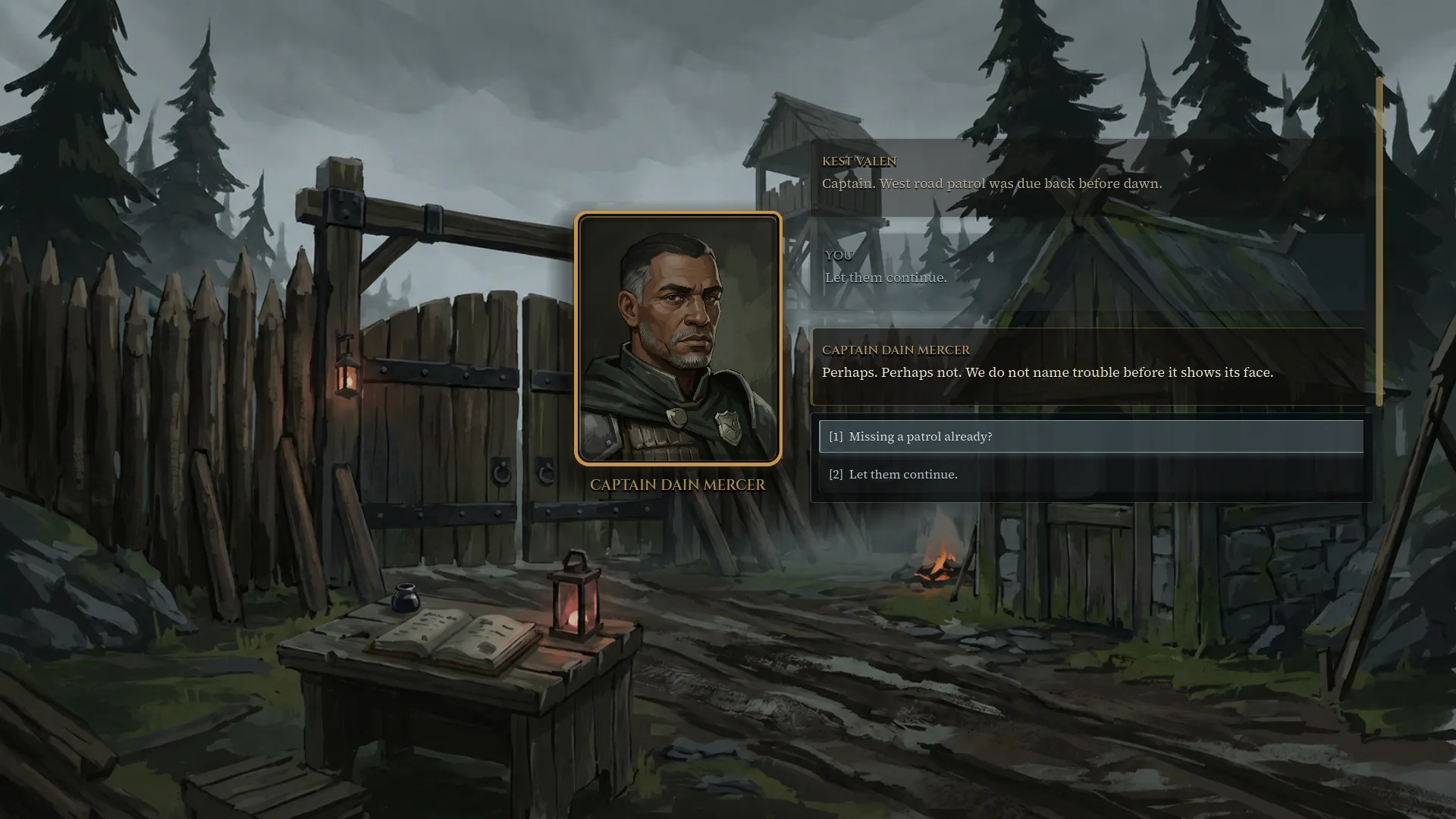
A single exchange with an NPC might need to show who’s speaking, what they just said, what was said earlier in the same conversation, and what the party can say back — including options that only exist because of a specific skill, class, or background. None of that is allowed to get in the way of just reading the scene.
The screenshot above is an early exchange at a frontier gatehouse. The active speaker’s portrait sits against the illustrated environment, their name and title anchor underneath it, and the transcript and current response choices sit in a fixed reading column beside it — so your eyes have one place to land, not four competing panels.
Choices carry information, not just text
Some response options are always available. Others exist because of who your character is — a Persuasion-tagged line, say, that only shows up if someone in the party can actually make the attempt.
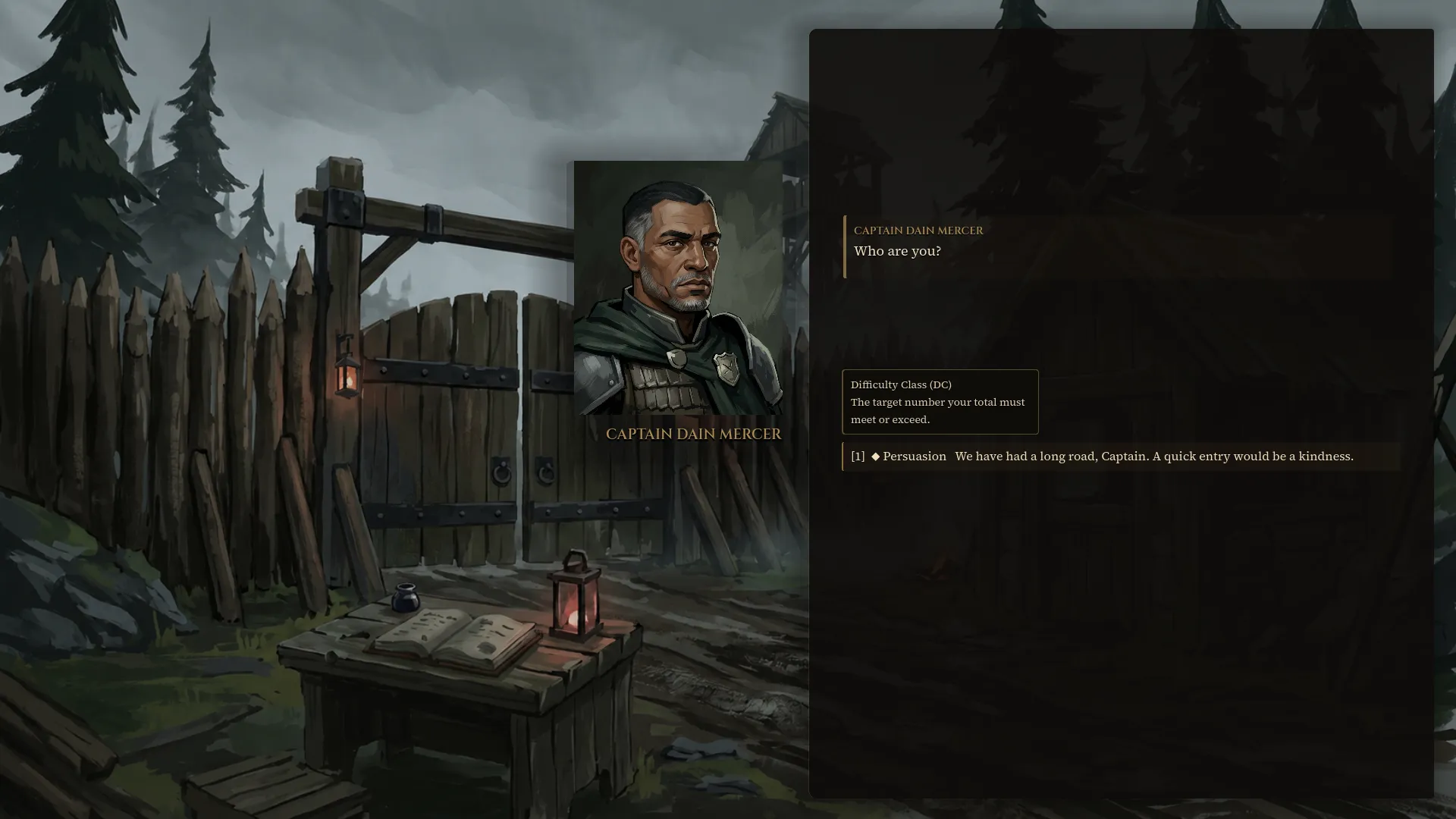
A response tagged with an ability check, plus the difficulty-class explainer new players see the first few times it comes up.
When a check like that gets used, the result has to feel like it belongs to the same conversation, not a separate minigame that interrupts it. The roll stays inside the same illustrated frame, tinted to match the attribute being tested:
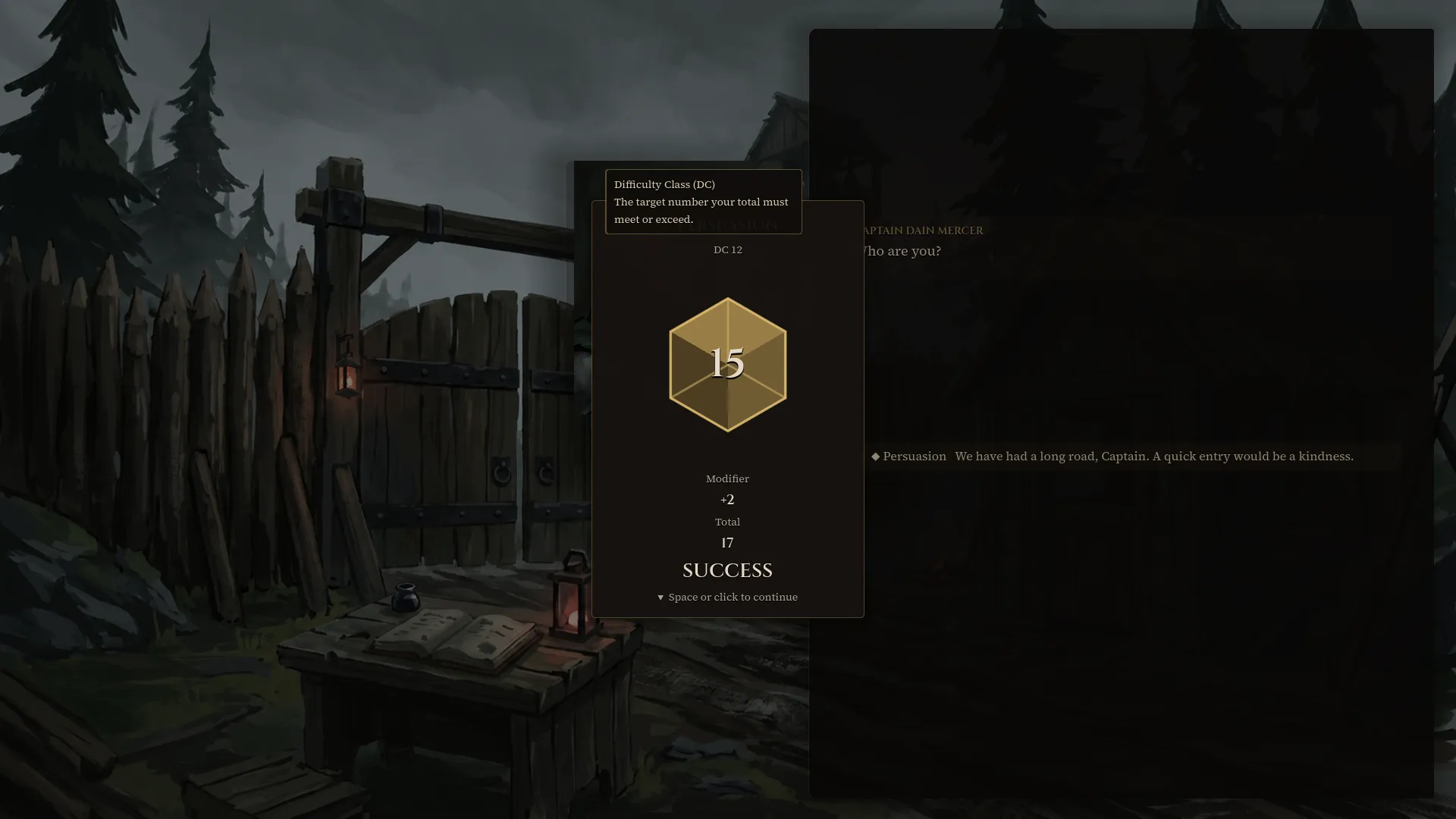
Difficulty class, modifier, and total are always spelled out — the die shows the raw roll and nothing else.
Why this is worth the effort
None of this is flashy on its own — it’s a portrait, some text, a handful of buttons. But conversations are where a DM-free game either earns your trust or doesn’t. If you want the bigger picture on why the game looks the way it does behind these scenes, the visual identity post covers the environment and character art this UI is built to sit on top of. And if you haven’t seen how dialogue fits into the rest of the game, the about page is the place to start.